-->

Khadi , reasons to wear our Indian fabric of Freedom and Self Reliance

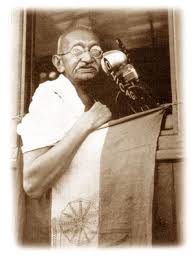
Khadi is a term used for fabrics that are hand-spun and hand-woven, usually from cotton fiber. However, khadi is also made from silk and wool, known as khadi silk or woolen khadi respectively. Khadi is a versatile fabric that remains cool in summer and warm in winter. It is also eco-friendly, durable and comfortable to wear. Khadi has a rich history and significance in the Indian subcontinent, as it was closely associated with the freedom struggle and the philosophy of Mahatma Gandhi.

Origin of Khadi

The origin of khadi can be traced back to the ancient times, when India was known for its textile industry and trade. India exported fine cotton fabrics to various parts of the world, such as Rome, China, Egypt and Persia. The spinning and weaving of cotton was a common household activity, especially among women. The charkha (spinning wheel) and the loom were the main tools used for making khadi.

However, with the advent of British colonial rule in India, the domestic textile industry suffered a severe decline. The British imposed heavy taxes and duties on Indian cotton and cloth, and imported cheap machine-made fabrics from Britain. This resulted in the loss of livelihood and dignity for millions of Indian spinners and weavers, who were reduced to poverty and starvation. The British also discouraged the use of khadi by Indians, as they considered it inferior and coarse.


Gandhi's Promotion of Khadi

Mahatma Gandhi, the leader of the Indian independence movement, recognized the importance of khadi as a symbol of self-reliance and resistance against colonial exploitation. He revived the art of spinning and weaving khadi by popularizing the use of the charkha among the masses. He made it his mission to promote khadi as a swadeshi (self-sufficient) product that could empower the rural poor and create a sense of national identity among Indians.

Gandhi also wore khadi as a mark of simplicity and solidarity with the common people. He urged his followers to boycott foreign cloth and adopt khadi as their daily wear. He said, "The message of the spinning wheel is much wider than its circumference. Its message is one of simplicity, service of mankind, living so as not to hurt others, creating an indissoluble bond between the rich and the poor, capital and labour, the prince and the peasant."

Gandhi also made khadi an integral part of his political campaigns, such as the Non-Cooperation Movement (1920-1922), the Salt March (1930) and the Quit India Movement (1942). He used khadi as a tool to mobilize people across caste, class, religion and gender lines. He also established various institutions and organizations to support the production and distribution of khadi, such as the All India Khadi Board (1924), the All India Spinners Association (1925) and the Khadi Village Industries Commission (1953).

Benefits of Wearing Khadi

Khadi has many benefits as a fabric that make it suitable for various occasions and seasons. Some of them are:

Khadi , reasons to wear the fabric of Freedom and Self Reliance

  • Khadi is natural and organic, as it does not use any chemicals or synthetic fibers in its making. It is gentle on the skin and does not cause any allergies or irritation.
  • Khadi is breathable and absorbent, as it allows air circulation and moisture evaporation. It keeps the body cool in summer and warm in winter.
  • Khadi is durable and strong, as it can withstand wear and tear for a long time. It does not fade or shrink easily.
  • Khadi is versatile and fashionable, as it can be dyed in different colors and patterns. It can also be stitched into various styles and designs.
  • Khadi is eco-friendly and sustainable, as it does not consume much water or energy in its production. It also biodegrades easily without harming the environment.

Khadi is not just a piece of cloth, but a piece of history and culture. It represents the values of freedom, self-reliance, simplicity and harmony that Gandhi embodied and advocated. It also reflects the diversity and richness of Indian textile traditions that have survived and evolved over centuries. By wearing khadi, we can honor our past, celebrate our present and contribute to our future.

4 principles of Mahathma Gandhiji worth following in our life

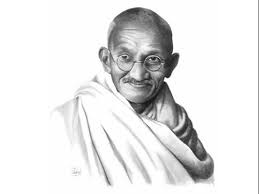
Mahatma Gandhi, also known as the Father of the Nation, was one of the most influential leaders of the Indian independence movement and a global icon of peace and non-violence. He followed and advocated a set of principles that shaped his life and his vision for India and the world. These principles are not only relevant for his time, but also for the present and the future generations who seek to create a more just, harmonious and sustainable society. In this article, we will explore some of the key principles of Gandhi and how they can help us to live a better life.

Truth
 

Truth, or satya, was the core principle of Gandhi’s philosophy. He believed that truth is God and God is truth. He said, “Truth is my religion and ahimsa (non-violence) is the only way of its realization.”  He also said, “There is no God higher than truth.”  For Gandhi, truth was not just a matter of factual accuracy, but also a moral and spiritual value. He sought to discover and practice the truth in every aspect of his life, from his personal conduct to his political action. He also respected the truth of others, even if he disagreed with them. He said, “I believe in the fundamental truth of all great religions of the world. I believe that they are all God-given and I believe that they were necessary for the people to whom these religions were revealed.”

How can we apply this principle in our life?

  • We can strive to be honest and truthful in our words, thoughts and deeds. We can avoid lying, cheating, stealing or harming others by our speech or action.
  • We can seek to understand and appreciate the truth of other people’s perspectives, beliefs and values. We can avoid judging, criticizing or imposing our views on others.
  • We can cultivate a spirit of inquiry and curiosity to learn more about ourselves, others and the world. We can avoid being dogmatic, rigid or closed-minded.

Non-violence
 

Non-violence, or ahimsa, was the means and the end of Gandhi’s philosophy. He defined non-violence as “the greatest force at the disposal of mankind. It is mightier than the mightiest weapon of destruction devised by the ingenuity of man.”  He practiced non-violence not only as a technique of resistance against oppression, but also as a way of life that promotes love, compassion and harmony among all living beings. He said, “Non-violence is not a garment to be put on and off at will. Its seat is in the heart, and it must be an inseparable part of our being.” He also said, “Non-violence is not passive but requires courage.”

How can we apply this principle in our life?

  • We can refrain from harming ourselves or others by our physical or verbal violence. We can avoid hurting, killing or exploiting any living creature.
  • We can resolve our conflicts and differences with others peacefully and constructively. We can avoid anger, hatred or revenge.
  • We can express our love and care for ourselves and others through our kindness, generosity and service. We can avoid selfishness, greed or indifference.
4 principles of Mahathma Gandhiji worth following in our life


Freedom
 

Freedom, or swaraj, was the goal and the right of Gandhi’s philosophy. He fought for India’s freedom from British colonial rule, but he also envisioned a broader meaning of freedom for every individual and society. He said, “Swaraj means self-rule or self-restraint…It means freedom from all restraints which are not self-imposed.” He also said, “Real swaraj will come not by the acquisition of authority by a few but by the acquisition of capacity by all to resist authority when abused.” For Gandhi, freedom was not just political or external, but also personal and internal. He believed that freedom requires responsibility, discipline and self-control.

How can we apply this principle in our life?

  • We can claim our freedom to choose our own path and purpose in life. We can avoid being influenced or controlled by others’ opinions or expectations.
  • We can exercise our freedom to express our thoughts and feelings in a respectful and responsible manner. We can avoid being silent or submissive when faced with injustice or oppression.
  • We can practice our freedom to develop our talents and potentials in a creative and constructive way. We can avoid being lazy or wasteful of our time and resources.

Equality
 

Equality, or samata, was the basis and the outcome of Gandhi’s philosophy. He opposed any form of discrimination or domination based on caste, class, race, religion, gender or nationality. He said, “All human beings are born equal…They have therefore equal claim upon society for food clothing residence education medical attendance etc.” He also said, “I do not want my house to be walled in on all sides and my windows to be stuffed. I want the cultures of all lands to be blown about my house as freely as possible. But I refuse to be blown off my feet by any.” For Gandhi, equality was not just a legal or social concept, but also a spiritual and moral value. He believed that equality requires respect, dignity and justice for all.

How can we apply this principle in our life?

  • We can recognize and respect the equal worth and rights of every human being. We can avoid discriminating, exploiting or oppressing anyone based on their identity or status.
  • We can celebrate and appreciate the diversity and richness of human cultures and traditions. We can avoid stereotyping, ridiculing or rejecting anyone based on their background or beliefs.
  • We can work and cooperate with others for the common good and welfare of all. We can avoid competing, hoarding or depriving anyone of their fair share of resources or opportunities.


Mahatma Gandhi’s principles are not only relevant for his time, but also for the present and the future generations who seek to create a more just, harmonious and sustainable society. By following and applying these principles in our life, we can become better human beings and contribute to a better world. As Gandhi said, “Be the change that you want to see in the world.”

Remembering Mahatma Gandhiji , the brave March

Mahatma Gandhi, also known as the Father of the Nation, was a leader of the Indian independence movement and a champion of nonviolence. He inspired millions of Indians to follow his example and resist British colonial rule peacefully. One of his most famous acts of civil disobedience was the Salt March, which took place in 1930.

The Salt March was a protest against the British monopoly on salt production and taxation in India. Salt was an essential commodity for Indians, as it was used for cooking, preserving food, and as a medicine. However, the British government imposed a heavy tax on salt and prohibited Indians from making or selling their own salt. This made salt unaffordable for many poor Indians and violated their right to use a natural resource.

Gandhi decided to challenge the British salt law by leading a march from his ashram in Sabarmati to the coastal village of Dandi, where he planned to make salt from seawater. He announced his intention in a letter to the British Viceroy, Lord Irwin, on March 2, 1930. He wrote:

I regard this tax to be the most iniquitous of all from the poor man’s standpoint. As the Independence movement is essentially for the poorest in the land, the beginning will be made with this evil.

He also warned that if the British did not repeal the salt tax, he would launch a campaign of civil disobedience that would involve breaking other laws as well.

On March 12, 1930, Gandhi set out on foot with 78 followers, mostly from his ashram. They covered a distance of about 390 kilometers (240 miles) in 24 days, stopping at various villages along the way. They were greeted by thousands of people who cheered them on, offered them food and water, and joined them in prayer and song. Gandhi also addressed several public meetings and urged people to join his cause.

On April 6, 1930, Gandhi reached Dandi and picked up a handful of salt from the seashore. He declared:

With this, I am shaking the foundations of the British Empire.


Remembering Mahatma Gandhiji , the brave March


He then boiled some seawater in a pot and produced more salt. His followers and other supporters followed his example and began making their own salt. This simple act of defiance sparked a nationwide movement of civil disobedience. Millions of Indians began making, buying, and selling salt illegally. They also boycotted British goods, refused to pay taxes, resigned from government jobs, and staged peaceful demonstrations and marches. The British authorities responded with brutal force, arresting thousands of people, including Gandhi and many of his close associates. They also used violence to disperse crowds and beat protesters.

However, the repression only strengthened the resolve of the Indian people. They continued their nonviolent resistance despite the hardships and sacrifices. The Salt March attracted international attention and sympathy for the Indian cause. It also exposed the moral bankruptcy of the British rule and its unjust laws. The Salt March was a turning point in the history of India’s freedom struggle. It showed that ordinary people could challenge an oppressive regime with courage and dignity. It also demonstrated the power and effectiveness of nonviolence as a weapon of change.

The Salt March was one of the many examples of Gandhi’s genius and leadership. He used a simple and symbolic issue to mobilize millions of people across India. He also inspired generations of people around the world to follow his path of truth and nonviolence. As he said: Nonviolence is not a weapon of the weak. It is a weapon of the strongest and bravest.

Gandhi Jayanthi - Swachh Bharat Abhiyan Pledge

To fulfill Mahatma Gandhi's vision of Clean India , Swachh Bharat Abhiyan is a massive mass movement that seeks to create a Clean India. Cleanliness was very close to Mahatma Gandhi's heart. A clean India is the best tribute we can pay to Bapu when we celebrate his anniversary.


Being an Indian responsible citizen , Let's take the Swachh Pledge :


  • Mahatma Gandhi devoted his life so that India attains 'Swarajya'. Now the time has come to devote ourselves towards 'Swachchhata' (cleanliness) of our motherland.
  • Mahatma Gandhi dreamt of an India which was not only free but also clean and developed.
  • Mahatma Gandhi secured freedom for Mother India.
  • Now it is our duty to serve Mother India by keeping the country neat and clean.
  • I take this pledge that I will remain committed towards cleanliness and devote time for this.
  • I will devote 100 hours per year, that is two hours per week, to voluntarily work for cleanliness.
  • I will neither litter not let others litter.
  • I will initiate the quest for cleanliness with myself, my family, my locality, my village and my work place.
  • I believe that the countries of the world that appear clean are so because their citizens don't indulge in littering nor do they allow it to happen.
  • With this firm belief, I will propagate the message of Swachh Bharat Mission in villages and towns.
  • I will encourage 100 other persons to take this pledge which I am taking today.
  • I will endeavor to make them devote their 100 hours for cleanliness.
  • I am confident that every step I take towards cleanliness will help in making my country clean. 


Take individual & Mass pledge by visiting at this link

https://swachhbharat.mygov.in/basic-page/take-pledge

Request every Indian citizen to forward this post to their friends and family circle groups , spread the awareness and contribute their hand towards a cleaner India. 

October 2nd Gandhi Jayanthi - Non-violence day. Its importance and your responsibility


October 2nd , one of the national holidays in India on account on Gandhi Jayanthi , to mark the anniversary of Mahatma Gandhiji , our father of nation who played a vital role for India independence from British.  Also known as Bapuji , Gandhiji was born on 2nd Oct 1869 at Porbandar , India. Also this day is celebrated internationally as Non-violence day.

Are you curious to know - what made Gandhiji so special and distinct , why there is a separate national holiday for his anniversary unlike other freedom fighters ? What is your role and responsibility on this day?

What made Gandhiji special

Yes, if you are an Indian you may have studied about Gandhiji & his teachings. His great thoughts and qualities stood out among the mass which made him a great leader.  Few of his unique qualities & work which made him special in a nutshell -
  • The practice of Non-Violence 
  • Satyagraha - devotion towards Truth.
  • Involvement in Civil rights movement in Africa while working as Barrister
  • Champarana and Kheda agitations
  • The Khilafat movement
  • Non-CoOperation movement as another tool in the struggle for independence
  • Dandi March - Salt Satyagraha
  • Opposition to child marriage
  • Quit India Movement
  • Swaraj Movement
  • Major role in uniting the Muslim & Hindu communities during Independence
  • Simple living , Celibacy / Bramhacharya , Fasting methods as a tool for freedom struggle
What is your responsibility on this day - Be the change you want to see in this world
  • To be a Gandhian - It is the duty of every Indian to remember this great leader on this occasion and pay respects
  • Gandhiji and his teachings are always inspiring to one's life . To the possible extent, one should read and educate others & children about his teachings , autobiography
  • As a tribute ,one should follow non violence
  • If possible , to wear a Khadi cloth instead of other foreign products , Gandhiji always advocated to wear homespun clothes rather than foreign textiles. 
Click here to read some of Gandhiji great quotes
Special occasions in Bangalore
  • Khadi cloth will be sold at discounted prices at Khadi Gram Udyog and other Khadi showrooms.
  • Discourses about Gandhiji teachings will be arranged in Malleshwaram Gandhi Sahitya Sanga.
  • Near Kumara Krupa  road , Gandhiji Research center & Gandhi Bhavana Library - houses many books about Gandhiji and his teachings
  • Cultural programes will be arranged in school & colleges.

Mahatma Gandhiji - Truth succeeds


Men often become what they believe themselves to be. If I believe I cannot do something, it makes me incapable of doing it. But when I believe I can, then I acquire the ability to do it even if I didn't have it in the beginning.

Always aim at complete harmony of thought and word and deed. Always aim at purifying your thoughts and everything will be well.

As long as you derive inner help and comfort from anything, keep it.

Freedom is not worth having if it does not include the freedom to make mistakes.

Happiness is when what you think, what you say, and what you do are in harmony.

Hate the sin, love the sinner.

Honest differences are often a healthy sign of progress.

Honest disagreement is often a good sign of progress.

I believe in equality for everyone, except reporters and photographers.

I cannot teach you violence, as I do not myself believe in it. I can only teach you not to bow your heads before any one even at the cost of your life.

I object to violence because when it appears to do good, the good is only temporary; the evil it does is permanent.

I want freedom for the full expression of my personality.

In the attitude of silence the soul finds the path in a clearer light, and what is elusive and deceptive resolves itself into crystal clearness. Our life is a long and arduous quest after Truth


Indolence is a delightful but distressing state; we must be doing something to be happy.

It is better to be violent, if there is violence in our hearts, than to put on the cloak of nonviolence to cover impotence.

It is unwise to be too sure of one's own wisdom. It is healthy to be reminded that the strongest might weaken and the wisest might err.

One needs to be slow to form convictions, but once formed they must be defended against the heaviest odds.

Strength does not come from physical capacity. It comes from an indomitable will.

The weak can never forgive. Forgiveness is the attribute of the strong.

Whatever you do will be insignificant, but it is very important that you do it.

When I despair, I remember that all through history the ways of truth and love have always won. There have been tyrants, and murderers, and for a time they can seem invincible, but in the end they always fall. Think of it--always.

You must be the change you want to see in the world.

You must not lose faith in humanity. Humanity is an ocean; if a few drops of the ocean are dirty, the ocean does not become dirty.

What difference does it make to the dead, the orphans and the homeless, whether the mad destruction is wrought under the name of totalitarianism or the holy name of liberty or democracy?

Victory attained by violence is tantamount to a defeat, for it is momentary.

An eye for an eye makes the whole world blind.

Freedom is not worth having if it does not connote freedom to err. It passes my comprehension how human beings, be they ever so experienced and able, can delight in depriving other human beings of that precious right.


Permanent good can never be the outcome of untruth and violence.

First they ignore you, then they laugh at you, then they fight you, then you win.

As human beings, our greatness lies not so much in being able to remake the world - that is the myth of the atomic age - as in being able to remake ourselves.

The difference between what we do and what we are capable of doing would suffice to solve most of the world's problems.

Victory attained by violence is tantamount to a defeat, for it is momentary.

One needs to be slow to form convictions, but once formed they must be defended against the heaviest odds.

I object to violence because when it appears to do good, the good is only temporary; the evil it does is permanent.

Prayer is not an old woman's idle amusement. Properly understood and applied, it is the most potent instrument of action.

The weak can never forgive. Forgiveness is the attribute of the strong

Terms | Privacy | 2024 🇮🇳
–>